Your couch has seen a lot of life — movie nights, pet cuddles, homework sessions, and the occasional mystery spill. Over time, fabric furniture collects dust, allergens, body oils, and stains that can make even the nicest piece look worn out. The good news? You don't need a cabinet full of harsh chemicals to get things looking (and smelling) fresh again.
At Central Park Cleaning, we've been helping Denver homeowners keep their spaces clean and healthy for over 20 years. One thing we've learned along the way is that eco-friendly cleaning solutions are not only better for your family and pets — they're often just as effective as the store-bought stuff. Here's how to tackle upholstery and fabric furniture the green way.
Start With the Basics: Vacuum First, Always
Before you introduce any moisture or cleaning solution, grab your vacuum. Use the upholstery attachment to thoroughly go over every surface — cushions, armrests, seat backs, and especially the crevices where crumbs and pet hair like to hide.
This step matters more than people realize. Vacuuming first removes loose debris so you're not rubbing dirt deeper into the fabric when you start scrubbing. It also picks up allergens like dust mites and pet dander, which is especially important here in Denver where dry indoor air can concentrate those irritants.
Always Check the Care Label
This small step saves a lot of headaches. Look for the tag on your furniture — it usually has a cleaning code:
Most fabric sofas and chairs fall into the W or W/S category, which means our eco-friendly, water-based solutions are totally fair game.
Your New Best Friend: DIY Eco-Friendly Upholstery Cleaner
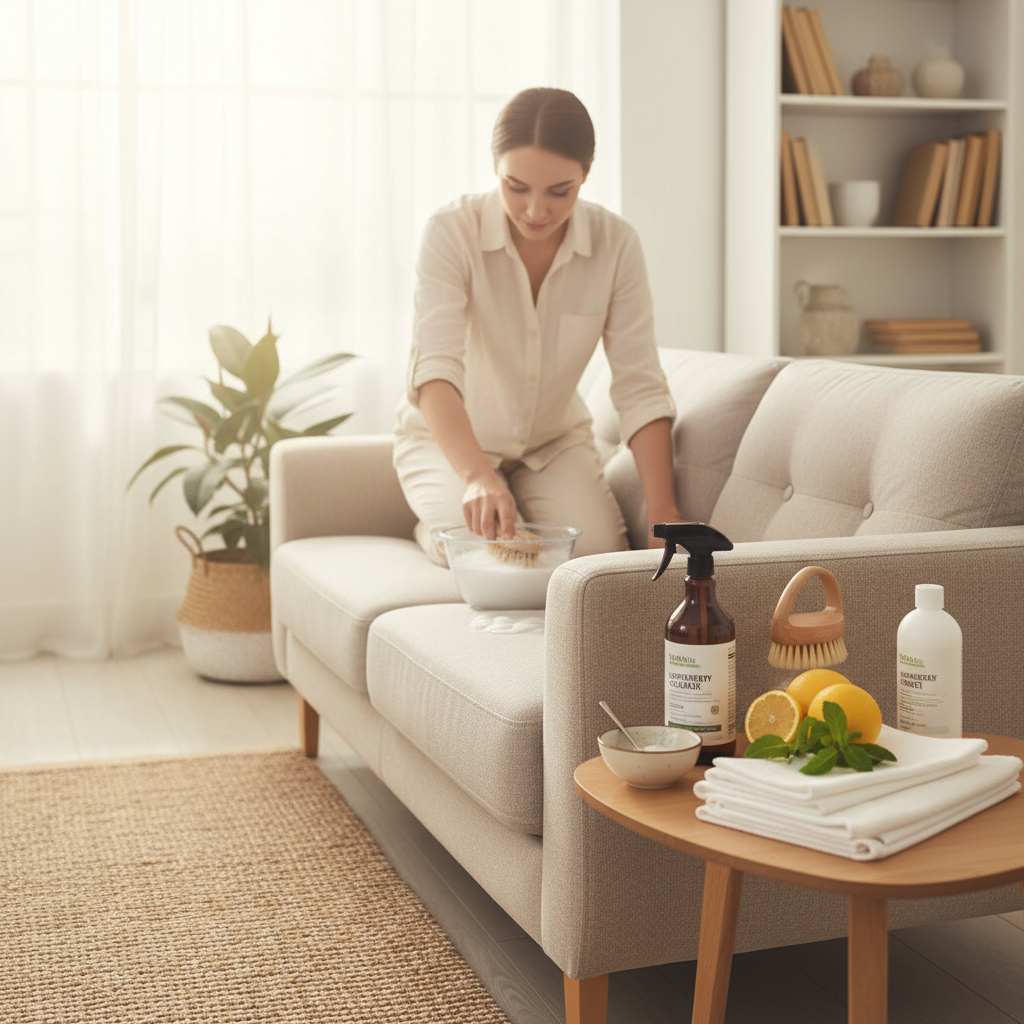
You probably already have everything you need in your kitchen or pantry. Here's a simple, effective cleaning solution that's gentle on fabric and kind to the environment:
All-Purpose Upholstery Spray:
Mix it in a spray bottle, give it a gentle shake, and you're ready to go. The dish soap lifts grease and grime, the vinegar cuts through odors and acts as a mild disinfectant, and the essential oil keeps things smelling fresh without synthetic fragrances.
How to Clean Fabric Furniture Step by Step
1. Spot test first.
Always apply your cleaner to a hidden area — like the back or underside of a cushion — and wait a few minutes to make sure it doesn't cause discoloration or damage.
2. Apply the solution lightly.
Lightly mist the stained or soiled area. You don't want to soak the fabric — too much moisture can lead to mildew, especially in Denver's cooler months when indoor humidity stays low and things dry unevenly.
3. Blot, don't scrub.
Using a clean white cloth or microfiber towel, blot the area gently — working from the outside of the stain inward. Scrubbing spreads the stain and can damage fabric fibers. Patience here really pays off.
4. Rinse with a clean damp cloth.
Once the stain is lifted, use a cloth dampened with plain water to blot the area and remove any soap residue. Leftover soap can actually attract more dirt over time, so this step is worth doing.
5. Let it dry completely.
Open a window, run a fan, or if it's a sunny Denver day, move cushions to a spot with good airflow. Avoid sitting on damp furniture until it's fully dry.
Tackling Common Stains the Natural Way
Keep It Fresh Between Deep Cleans
A few simple habits go a long way toward keeping your upholstery looking its best:
When to Call in the Pros
Sometimes a piece of furniture needs more than a DIY treatment — especially if it's heavily soiled, has deep-set stains, or hasn't been cleaned in years. That's where we come in. At Central Park Cleaning, we use eco-conscious products and methods that are safe for your home, your family, and Denver's environment. Whether it's a beloved sectional or a vintage armchair you'd like to restore, our team knows how to treat your furniture with the care it deserves.
Living in Denver means enjoying an active, vibrant lifestyle — and your furniture should reflect that without being a source of stress. A little routine care using the right green cleaning methods keeps your home feeling fresh, welcoming, and healthy all year long.
*Have stubborn stains or just want to leave it to the experts? [Contact Central Park Cleaning today](https://www.centralparkcleaningdenver.com) and let us take care of it for you!*